

Overview
Ensuring safe and clean drinking water is a critical task in modern water treatment systems. One essential parameter for water safety is the concentration of residual chlorine — a disinfectant commonly used to eliminate bacteria and pathogens. Residual chlorine sensors play a vital role in real-time monitoring of disinfectant levels in municipal water supplies, helping utilities maintain effective treatment while preventing health risks from both under- and over-chlorination.
What Is a Residual Chlorine Sensor?
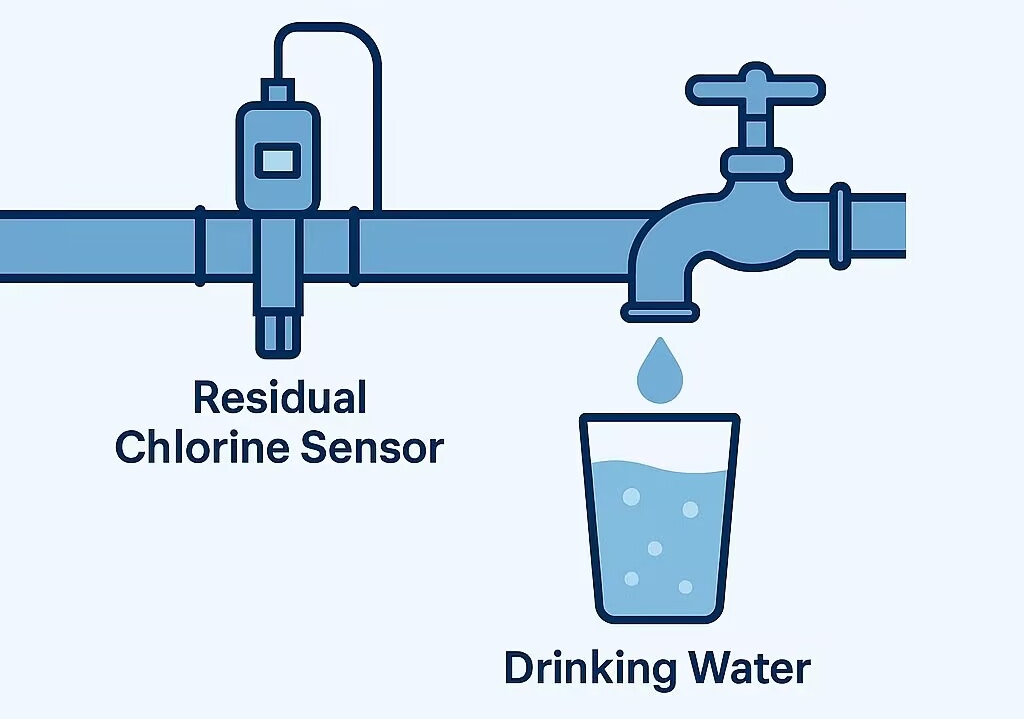
A residual chlorine sensor, also known as a free chlorine sensor, is a water quality monitoring device designed to measure the concentration of chlorine remaining in treated water after the disinfection process. This residual chlorine helps to ensure continued microbial control as water travels through distribution networks to consumers. These sensors are essential in safeguarding public health by confirming that chlorine levels remain within safe and regulated limits.
Working Principle
Most modern residual chlorine sensors operate based on amperometric measurement principles. The sensor consists of a membrane-covered electrode that detects chlorine via electrochemical reactions. As chlorine diffuses through the membrane, it reacts at the electrode surface, generating a current proportional to the concentration of chlorine in the sample.
Applications in Drinking Water Treatment
Residual chlorine measurement is a key component of water treatment systems, especially in drinking water facilities. These sensors are widely installed at:
- Water treatment plant outlets
- Water storage tanks
- Distribution network monitoring points
- End-user delivery points
By providing continuous, online monitoring, residual chlorine sensors allow operators to:
- Ensure disinfection compliance with WHO and EPA standards
- Adjust chlorine dosing in real-time based on demand and flow
- Prevent under-dosing that could lead to microbial contamination
- Avoid over-dosing, which may lead to harmful disinfection byproducts
Brand Advantages
Our residual chlorine sensors offer high stability, low maintenance, and excellent compatibility with various water conditions. Designed for easy integration into online monitoring systems, they are ideal for municipal and industrial water treatment applications. Our portfolio includes sensors with automatic temperature compensation, digital output, and advanced diagnostics to ensure long-term accuracy and reliability.
Conclusion
In summary, residual chlorine sensors are essential tools for ensuring the safety and quality of drinking water. By providing accurate, real-time measurements, these sensors help treatment facilities maintain optimal chlorine levels, protecting public health and improving operational efficiency. Integrating residual chlorine monitoring into water systems is a smart step toward safer, cleaner water for all.
