
Overview
In modern aquaculture, maintaining optimal water quality is crucial for fish health and growth. One of the most critical parameters is dissolved oxygen (DO). A dissolved oxygen sensor provides real-time monitoring and control of DO levels, ensuring that aquaculture and aeration systems operate efficiently and sustainably.
What Is a Dissolved Oxygen Sensor?
A dissolved oxygen sensor, or DO sensor, is a water quality sensor that measures the concentration of oxygen dissolved in water. It is an essential tool in aquaculture for detecting oxygen levels to prevent hypoxia and ensure optimal conditions for aquatic life. Sensors typically use optical or electrochemical methods to provide accurate and continuous DO readings.
Working Principle of DO Sensors
Modern DO sensors often rely on optical technology. An internal light source excites a luminescent dye, and the presence of oxygen quenches the fluorescence. By measuring the intensity or decay rate of the emitted light, the sensor calculates the oxygen concentration in the water. This method offers excellent accuracy, stability, and low maintenance, making it ideal for aquaculture environments.
Benefits of DO Sensors in Aquaculture Systems
Using dissolved oxygen sensors in aquaculture operations provides several benefits:
- Real-time Monitoring: Continuous tracking of oxygen levels allows prompt responses to oxygen fluctuations.
- Improved Fish Health: Stable DO levels reduce fish stress and mortality, enhancing growth rates and yield.
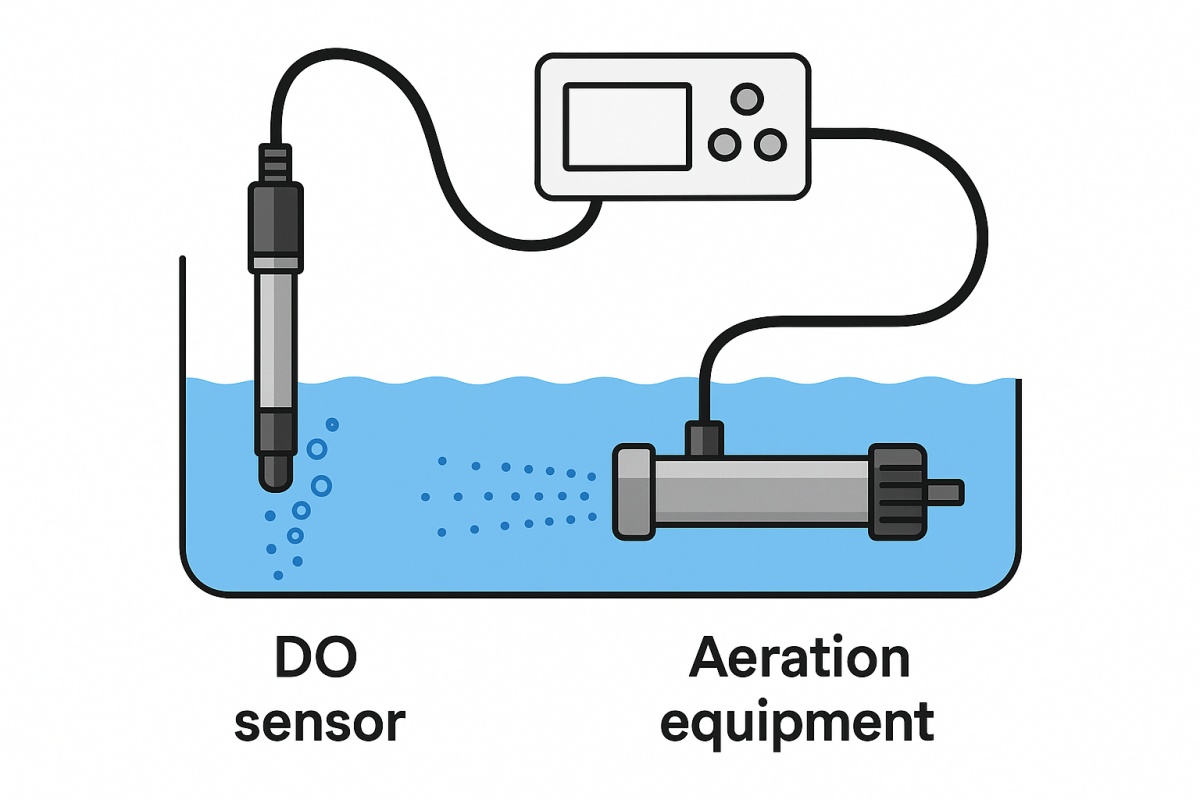
- Optimized Aeration Control: Integrated with control systems, DO sensors regulate aerators based on demand, conserving energy.
- Automated Oxygen Management: Automatic feedback to aeration systems maintains optimal oxygen conditions without manual intervention.
Role in Aeration System Efficiency
In intensive fish farming, oxygen demand varies with temperature, biomass, and feeding schedules. A DO sensor communicates with the aeration system to supply just the right amount of oxygen, avoiding under-aeration (which risks fish health) and over-aeration (which wastes energy). This improves energy efficiency and operational costs.
Applications in Aquaculture
Dissolved oxygen sensors are used across various aquaculture setups:
- Fish Ponds & Tanks: Ensuring oxygen sufficiency in closed systems.
- Recirculating Aquaculture Systems (RAS): DO sensors are critical for maintaining water quality in high-density systems.
- Hatcheries: Monitoring delicate environments for fry and fingerlings.
- Offshore Cages: Remote sensing with data transmission for ocean-based aquaculture.
Conclusion
Integrating a dissolved oxygen sensor into aquaculture operations brings measurable benefits in productivity, energy efficiency, and fish welfare. When paired with intelligent aeration systems, these sensors enable automated and data-driven oxygen management, essential for sustainable aquaculture growth. As technology advances, DO sensors continue to play a vital role in precision aquaculture and efficient water quality control.
