
Overview
As global environmental standards continue to tighten, industries across the world are under increasing pressure to monitor and control the quality of their wastewater discharge. Among various pollutants, Chemical Oxygen Demand (COD) is a critical parameter that directly reflects the concentration of organic contaminants in water. Failing to meet discharge limits can lead to severe consequences - from regulatory fines to plant shutdowns.
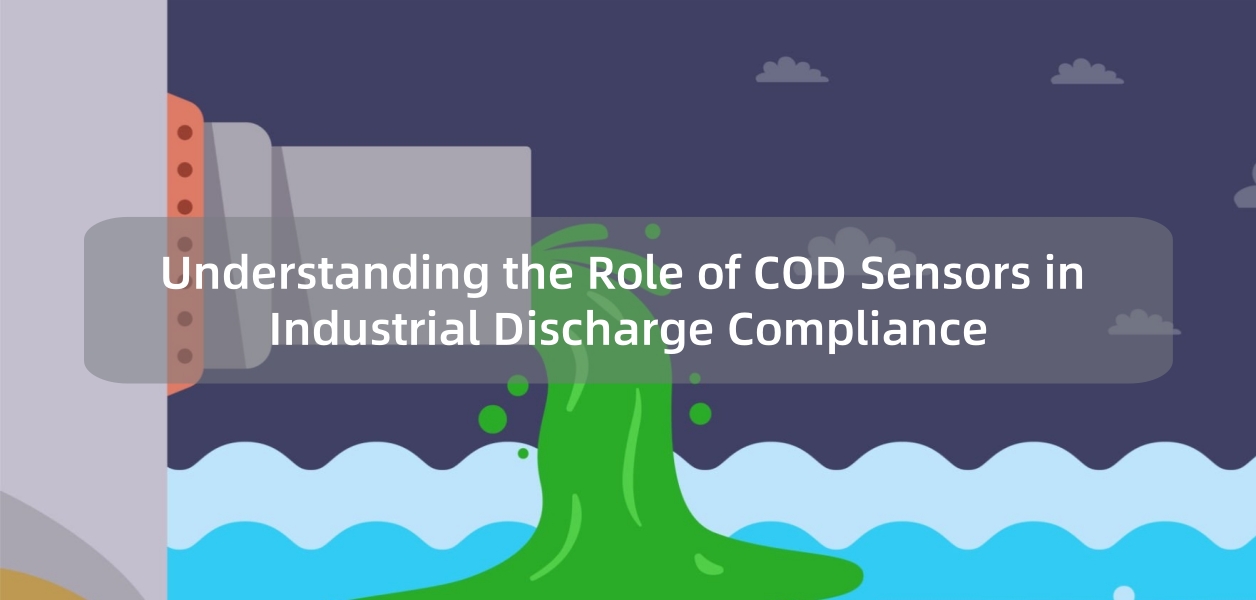
To stay compliant and avoid unnecessary risks, industries are increasingly adopting advanced technologies like COD Sensors and COD Probes. These instruments enable continuous, real-time monitoring of COD levels, helping treatment plants maintain efficiency, accuracy, and regulatory compliance.
What Is COD and Why Is It Important?
Chemical Oxygen Demand (COD) is the amount of oxygen required to chemically oxidize organic and inorganic matter in a water sample. It is a key indicator of water pollution, especially in industrial and municipal wastewater. COD levels are typically expressed in milligrams per liter (mg/L), and higher values indicate higher levels of organic pollutants.
Monitoring COD is crucial because:
- It reflects the potential oxygen depletion in receiving water bodies.
- It helps assess the effectiveness of wastewater treatment processes.
- It serves as a basis for calculating pollution load and meeting discharge permit requirements.
Industries such as textile, paper, chemical, food & beverage, and pharmaceuticals produce large volumes of wastewater with high organic content. Continuous and accurate COD measurement is not just a compliance requirement - it's a cornerstone of responsible, sustainable operation.
What Is a COD Sensor?
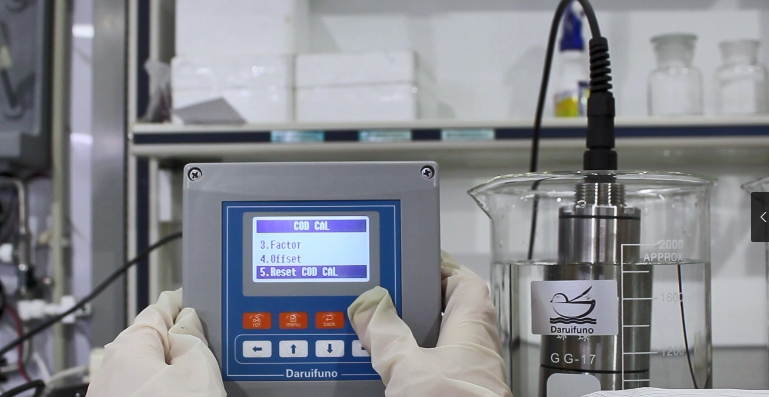
A COD Sensor (or COD Probe) is an electronic device designed to measure the COD concentration in water or wastewater in real time. Unlike traditional laboratory methods that require chemical reagents and manual sampling, COD sensors provide continuous data for instant decision-making.
These sensors use optical or chemical principles to estimate COD values. The most common type today is the UV254 absorption method, which leverages the fact that organic matter absorbs ultraviolet light at a wavelength of 254 nm. This non-contact, reagent-free approach allows for fast and environmentally friendly monitoring.
How COD Sensors Work
Modern COD Sensors typically function based on one of the following principles:
- UV254 Absorption: Measures the absorption of ultraviolet light by organic molecules, offering real-time results without reagents.
- Rapid Digestion + Optical Detection: Involves heating the sample with reagents for quick oxidation, then measuring light absorption or reflection.
Key features of advanced COD sensors include:
- Dual-wavelength light sources (254 nm and 365 nm) for turbidity compensation
- Self-cleaning systems (wipers or brushes) to prevent biological fouling
- Digital output via RS485, supporting Modbus RTU protocol
- Compact, submersible designs for easy installation in open channels or tanks
By continuously tracking COD values, the sensor feeds critical data into the treatment process, enabling automated control of aeration, chemical dosing, or alarms - all in real time.
Applications Across Industries
COD Sensors and COD Probes are essential tools in a wide variety of industries that generate organic-rich wastewater. Here are just a few examples:
- Textile & Dyeing: Monitor dye-based organic compounds to ensure safe discharge.
- Chemical Plants: Track COD fluctuations during batch operations for better process control.
- Food & Beverage: Measure organic waste from production lines to optimize biological treatment.
- Paper & Pulp: Monitor lignin and other natural pollutants in effluent.
- Municipal Treatment Plants: Adjust treatment intensity based on incoming COD loads.
In all these industries, maintaining optimal COD levels is not just about compliance - it’s about improving operational efficiency, reducing chemical usage, and protecting the environment.
Why Choose Daruifuno COD Sensors?
At Daruifuno, we recognize that industries need monitoring solutions that are reliable, low-maintenance, and easy to integrate, which is why we provide a range of high-performance COD Sensors and Probes designed for industrial applications. These sensors boast wide COD measurement ranges and an integrated rubber scraper for automated self-cleaning, with a sturdy construction using POM and 316L stainless steel to ensure durability. Compact and rugged, they are suitable for immersion or pipeline installation and have proven their performance in demanding environments, delivering trustworthy data around the clock, whether you're upgrading your wastewater monitoring system or installing a new treatment setup.
Explore Daruifuno’s Full Range of COD Sensors
If your facility needs accurate, real-time COD monitoring to meet discharge standards and improve operational performance, we invite you to explore our full range of COD Sensors and COD Probes. Browse product specifications, compare models, and find the right sensor for your system.
